.jpg)


Back in the day, as a newly minted engineer on site, I walked into a site office one hot morning and found three open binders. in one, JHAs in another, toolbox talks in the third.
The foreman swore the confined-space crew had signed off, the health and safety lead wasn’t so sure. When we checked, the four-gas test log was missing – the one proof that the air inside the tank was safe to breathe. No one had skipped it; it just hadn’t been captured.
READ MORE: High-Risk Safety Inspections: The Impact on Construction Safety
When an auditor walks in, you’re digging instead of showing. Crews wanted to do the right thing. But when safety runs on trust and memory instead of structured data, small lapses turn into risks.
Forms alone aren’t going to solve this problem.
We need to treat safety like schedule and cost – core infrastructure that runs every day without drama. When it’s built into the system, you don’t lose the data that proves the air was checked, the lift was signed off, or the control was in place. '
It’s the difference between assuming a step happened and knowing it did. Procore helps keep delivery tight – RFIs, subs, schedule. If you already run Procore, you’ve got a strong backbone for building.
What’s been missing on many jobs is safety process management that brings the same rigor and lifecycle control.
What “Stronger Together” looks like on a real job
If you manage delivery in Procore, you’re on a good thing. But safety is an area that needs to be elevated, and our Procore-using customers have told us that HammerTech is essential for achieving that.
HammerTech plugs into your project management and other ConTech tools to run the safety lifecycle for your projects from end to end. Workers register and complete inductions with embedded tests, including interpreter-assisted options when needed.
JHAs aren’t just files – they move through review checklists, can be flagged as High Risk with timed re-reviews, and require workers to re-sign when material changes are made.
DIVE INTO THE DETAILS: The HammerTech & Procore Integration
Permits aren’t static PDFs – they live on zones tied to a site diagram, with start and stop tracked, conflicts highlighted, and a board the site can see on the public page or TV. That’s how you avoid the kind of near miss that starts with a missing test record and ends with a shutdown or investigation.
Incidents and injuries are managed separately, with treatment details and lost time recorded properly. These workflows are governed in HammerTech and surface in dashboards, site diaries, and exportable reports – and can be integrated into other systems via our REST and Reporting APIs.
Field use is the make-or-break.
If the process slows a crew, they work around it. HammerTech is built to sit in the flow. QR sign-ins at the gate tie straight into permits and the day’s pre-task plan. Meeting signatures happen on the way in, not on a clipboard later.
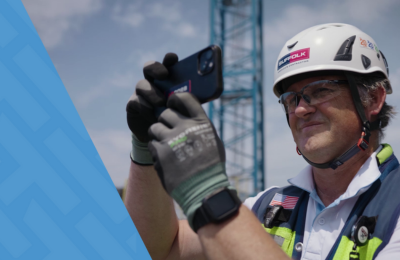
An inspector snaps a photo and raises an observation in seconds. AI-powered HammerTech Intelligence takes more of the admin out of the way – an in-system SDS submittal populates from an uploaded PDF, a recorded briefing turns into hazards and controls in the PTP, a photo suggests the right observation type and a sensible description.
Less friction means fewer skipped steps. Fewer skipped steps means the record finally reflects the work. When that happens, the knock-on effects are obvious.
The crane lift doesn’t start until the hot works permit is active and visible. Overlapping permits get sorted before crews trip over each other. Subcontractors see what’s overdue without a phone call.
READ MORE: Crowdsource Safety with HammerTech Subcontractor Management
The site diary isn’t a patchwork of guesses; it reflects who signed in, who signed off, what got approved, what still needs attention. Audits become normal business. Exports take minutes.
You stop hunting for proof and start acting on what the data is telling you – the same hazard reappearing at one elevation, a lagging subcontractor, a cluster of unsigned JHAs after changes were made.
Let's be practical
Procore does have some basic safety capabilities – it slips in as part of their Quality tool. It’s useful for logging, but our customers tell us time and time again it isn’t built to govern the safety lifecycle for high-risk work.
Safety deserves more than the basics.
Yours is a world that requires managed JHAs, live permit control, injury registers, and real adoption in the field. That only comes with the depth of a dedicated safety platform running in concert with your delivery platform.
READ MORE: The HammerTech Knowledge Center - JHAs
Two systems might sound like too many, but look at what you run today – paper, email, Excel, text threads, phone photos, a legacy app.
HammerTech replaces those ad-hoc tools and connects to Procore via supported APIs. You end up with a governed safety platform and your delivery platform in sync, not a jumble to babysit.
On cost, let’s be blunt.
Teams lose hours to reconciliation and signature chasing — time that could be spent keeping people safe instead of chasing paper. The real expense isn’t just in the admin work; it’s in the risks that surface later, when a regulator asks for proof and the file isn’t there.
It doesn’t take many avoided mistakes to pay for a platform that closes those gaps. And when it comes to getting everyone on a jobsite involved in safety, that shouldn’t cost extra either.
Safety is a team sport — the more eyes on the ball, the fewer chances something slips through. The key thing is, this isn’t about picking sides.
Procore keeps project delivery on track. HammerTech gives safety the backbone it’s been missing – fewer gaps, stronger compliance, better outcomes.
Together, your build goes as planned and people go home as they arrived.
If that’s the standard you’re after, wire them together and run the work that way every day.