

Safety is foundational in construction. Whether you’re managing a tower build in London, a refinery in Texas, or a data center in Sydney, one constant remains: risk must be controlled before work begins.
Across global regions, this is achieved through different frameworks:
-
JHAs in North America (USA & Canada)
-
RAMS in the UK and Ireland
-
SWMS in Australia and New Zealand
While each reflects local regulations and safety cultures, their intent is the same: protect people and keep projects moving safely. On global projects, misunderstandings between JHAs, RAMS, and SWMS don’t just slow approvals - they create real gaps in risk control when teams move between regions, contractors, and systems.
This guide breaks down how these documents compare, where they commonly fail on live sites, and how modern contractors are turning them into connected, digital safety workflows.
What are JHA, RAMS, and SWMS?
1. JHA (Job Hazard Analysis) – North America
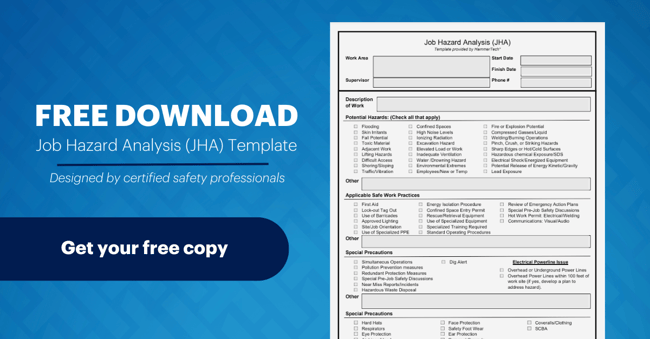
In the United States and Canada, contractors rely on a Job Hazard Analysis (JHA) to identify hazards associated with specific tasks and define control measures. OSHA strongly recommends JHAs under its Job Hazard Analysis Guidelines (OSHA 3071). While not always explicitly mandated by federal law, they are widely required by General Contractors (GCs), owners, and insurers as a baseline for safe work.
In the real world: JHAs are typically completed during the preconstruction phase. To be effective, they must be supported by Pre-Task Plans (PTPs) or Daily Safety Briefings to capture daily site changes and real-time risk.
2. RAMS (Risk Assessment and Method Statement) – UK & Ireland
A RAMS combines two elements into one document:
-
Risk Assessment: Identifies hazards, evaluates risk, and defines controls.
-
Method Statement: Explains step-by-step how the task will be completed safely.
In the real world: RAMS are common on large-scale European projects. They are often well-written but can become "static" documents that aren't revisited when site conditions change. In North America, a JHA paired with a PTP achieves a similar result to the RAMS framework.
3. SWMS (Safe Work Method Statement) – Australia & New Zealand
In Australia and New Zealand, SWMS are legally required for high-risk construction work under WHS Regulations.
In the real world: The stakes are high; if a SWMS is missing or generic, work can be stopped immediately by site leadership or regulators.
At a Glance: How Do They Compare?
Each exist to do the same thing: turn safety from paperwork into shared understanding before work starts.
| Document | Primary Region | Legal Requirement | Core Purpose | Typical Owner | Common Failure Point |
| JHA | North America | Recommended (OSHA 3071) | Identify tasks, hazards, and controls | GC /Subcontractor | Created for compliance, not referenced daily |
| RAMS | UK / Ireland | Yes (CDM 2015) | Combine risk assessment and method | Main Contractor /Subcontractor | Reviewed once, not updated when conditions change |
| SWMS | Australia / NZ | Yes (WHS Regs) | Define safe methods for high-risk work | Principal /Trade Contractor | Generic templates reused across activities |
Global Lessons: What Do They All Have In Common?
Despite regional differences, JHAs, RAMS, and SWMS all rely on five fundamentals:
-
Hazard identification: Knowing what could cause harm.
-
Risk assessment: Understanding likelihood and severity.
-
Control measures: Reducing risk through practical action.
-
Communication: Ensuring crews understand the plan.
-
Verification: Sign-off, review, and adjustment as work evolves.
Sites often struggle with execution, not intent.
Beyond Paper: Why Do Digital RAMS Matter?
From documentation to intelligence
A common content gap across safety guidance is this: most explain what RAMS, JHAs, or SWMS are, but not how they function on a live site once conditions change.
Paper and static PDFs don’t adapt. They don’t connect to inductions, permits, or inspections. They don’t show who has actually read or acknowledged the document.
A digital safety platform changes that by making safety documentation:
-
Connected: Linked to inductions, permits, and inspections.
-
Dynamic: Updated instantly when conditions change.
-
Visible: Tracked through real-time dashboards.
-
Collaborative: Accessible and signable on mobile devices.
Regional Best Practices
North America
-
Pair JHAs with daily Pre-Task Plans
-
Track engagement, not just completion
-
Use data to identify recurring hazards and training gaps
United Kingdom & Ireland
-
Keep RAMS concise and site-specific
-
Review RAMS when scope, access, or sequencing changes
-
Maintain digital audit trails for HSE inspections
Australia & New Zealand
-
Tailor SWMS to the specific high-risk activity
-
Ensure live access across remote sites
-
Use reporting to identify gaps before audits occur
How digital tools bridge global safety standards
Contractors working across regions face fragmented formats and terminology. HammerTech solves this by turning JHAs, RAMS, and SWMS into structured, connected data.
With HammerTech, safety teams gain:
-
Real-time visibility across projects and contractors.
-
AI-powered summaries of engagement and compliance.
-
Centralized workflows linking inductions, inspections, and permits.
-
Unlimited access for every worker, without per-seat barriers.
That’s what platform depth looks like in practice.
Ready to simplify your JHA, RAMS, and SWMS processes? Book a demo today.
Useful links - internal
-
JHA vs Pre-Task Plan: Do You Need Both a Pre Task Plan and a Job Hazard Analysis?
-
Pre Task Planning Best Practices: Pre Task Planning Benefits, Prep Work and Best Practices
-
ROI of EHS Software: How Investing in Safety and Compliance Can Boost Your Bottom Line
-
RAMS in Construction UK Guide: RAMS in Construction: The Essential Guide
-
AI Safety Features: AI & Visibility Features to Empower Safety Teams