Ryan Companies was running hundreds of permits a week on data centers where live electrical systems share space with active construction crews. One morning, a subcontractor handed over 108 pages of handwritten paperwork before work began. The sheer volume of information made it a challenge to instantly verify that every detail was aligned with the dynamic conditions on site throughout the day.
|
COMPANY
Ryan Companies
|
HQ
Minneapolis, MN, U.S.
|
FIRM SIZE
1,000 - 5,000
|
|
FIRM TYPE
General Contractor
|
FOCUS
Commercial / Mission Critical Data Centers
|
CHALLENGE
Managing high-risk work across complex environments
|
THE PROBLEM -
High risk work on live environments – managed on paper
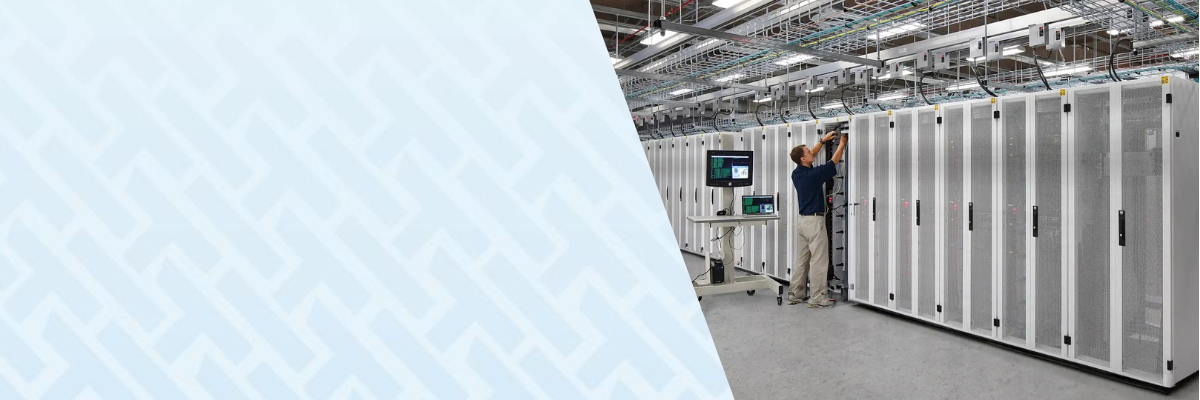
Data centers aren't like other builds. They concentrate enormous amounts of electrical and mechanical energy—live, energized systems—in a dense footprint, while construction continues around them. Crews rotate across shifts. Trades share space under compressed timelines. Sections go hot while others are still being built.
The safety challenge isn't just risk volume. It's the speed at which conditions change.
"There's a lot of density of energy per square foot. You also have a lot of people working in those environments at accelerated rates and long hours. That combination creates a very high-risk environment."
Managing that risk means lockout/tagout, critical lifts, energization procedures, and a constant stream of permits - hundreds, sometimes thousands, per week. Ryan's teams were generating all of it. The documentation existed. But it lived on paper, disconnected from the field.
|
THE MOMENT THAT MADE IT UNDENIABLE "In one morning, a subcontractor filled out 108 pages of paper. It was all hard copy. We weren't capturing it in a way that allowed us to measure performance against the plan." - Michael Beadle |
The gap wasn't paperwork volume. It was that nobody could compare what had been approved at 7am to what was happening on site at 2pm. In an environment where an energized system and an uninformed crew can be lethal, that gap is unacceptable.
THE SOLUTION -
Not just digital forms - a clear view of the whole site
Ryan needed more than an app that replaced clipboards. They needed a system that could connect the full chain: what's planned for today, who's approved it, who's actually on site, what they're qualified to do, and whether the work in the field is matching the permit that was signed off that morning.
|
100+
Permits managed per week
|
0
Real-time connection between approvals and field execution
|
108
Pages of paper filled out by one subcontractor
|
"We're managing hundreds, if not thousands, of permits per week. Our clients expect detailed documentation. It's not just about controlling the work - it's also about showing your work."
They also needed something that could scale. Data center construction follows repeatable patterns - same client expectations, same documentation standards, same high-hazard workflows across dozens of projects. A solution that worked on one site had to work the same way on the next one.
WHY HAMMERTECH -
One platform. Every layer of the safety workflow.
Ryan chose HammerTech because it was built to connect all of their safety processes, not just digitize one piece of it. Most tools solve documentation. HammerTech connects documentation to approval to execution, and gives the ability to aggregate all of that data into instant insights.
The architecture mattered: Job Hazard Analyses link directly to daily Pre-Task Plans, which link to permit workflows, which link to who is badged on site and what training they hold. Approval isn't a separate step, it's embedded in the workflow.
You can see, in real time, whether the work happening in the field is aligned with what was signed off that morning.
Ryan also integrated HammerTech with their existing site access and badging systems. This meant they could cross-reference worker certifications, PTP participation, and physical site presence without running two separate orientation processes.
|
THE DECIDING FACTOR "The biggest piece we were interested in was collecting all of our safety data in one place so we could actually use it." - Michael Beadle |
The key word is use. Ryan wasn't looking for a better filing cabinet. They were looking for a platform that turned documentation into operational intelligence - something that could tell them what was happening, where risk was concentrated, and what was coming next.
THE RESULTS -
From paper trail to real-time control
The transformation wasn't just about efficiency. It changed what was possible from a safety management standpoint.
|
BEFORE HAMMERTECH
|
AFTER HAMMERTECH
|
"People don't like to use the word compliance. But at the end of the day, HammerTech allows us to prove that we're following the program we've put on paper."
That last point matters more than it sounds. On mission critical projects, owners require detailed documentation. The ability to demonstrate - not reconstruct - that safety procedures were followed, in real time, is a competitive differentiator. Ryan can now show the work, not just do it.
COMPOUNDING VALUE -
Every project makes the next one safer
Data center construction is, in Beadle's words, "repetitive and in quick succession." The design prototypes evolve, but the operational workflows—how permits are managed, how trades are coordinated, how energization is controlled—stay consistent across facilities.
That repeatability is a multiplier. Every hazard trend Ryan captures on one project becomes an input for the next. Recurring risks that cost time and near-misses on one build can be engineered out of the planning process on the next.
"We can look at the data and say, 'These are some of the issues we kept having to address. Let's come up with a better approach next time.'"
This is the shift from reactive to proactive, from safety as documentation to safety as institutional memory.
|
WHAT'S NEXT? Ryan is now moving toward predictive risk modelling, combining schedule data, subcontractor performance, and field safety activity to identify where risk is building before it becomes a problem on site.
The solution has transformed a data management challenge into a strategic advantage for planning and execution. Instead of relying solely on predictive planning, Ryan’s teams now operate with real-time intelligence from the field. This provides a new level of foresight, giving them a clear, data-driven view of what’s coming and where to focus before conditions change. |
|
SEE IT FOR YOUR TEAM -
Safety you can see. Control you can prove.Find out how HammerTech connects planning, permits, and field execution for mission critical construction teams.
|

.png)