
%20GIF.gif?width=200&name=HammerTech%20Intelligence%20(HTI)%20GIF.gif)
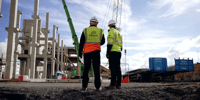
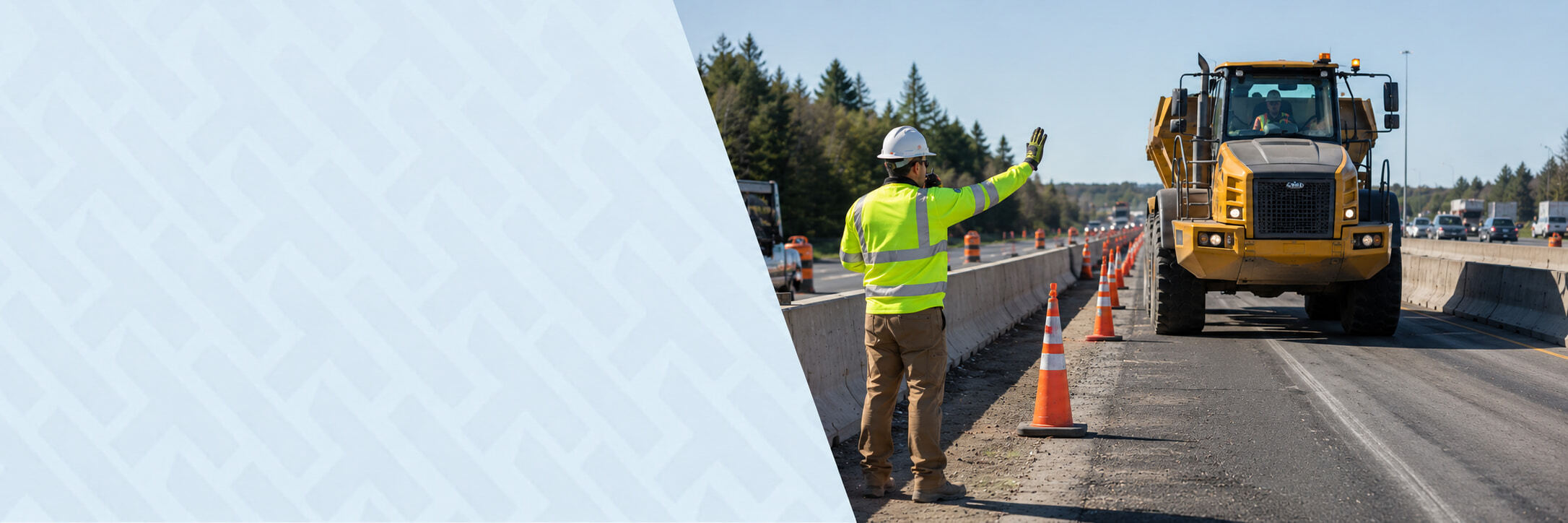
On civil infrastructure projects, crews work alongside live traffic, pedestrians and constantly moving plant. One team may be working beside an open carriageway; another may be operating excavators and paving equipment along a kilometres-long section of road; and another could be working on a bridge above a busy motorway.
A safety manager might cover four or five of these locations in a day, often without reliable mobile coverage or a full-time safety professional at every location. When workers, road users, vehicles and mobile plant operate in close proximity, incidents can - and unfortunately do - happen.
The Health and Safety Executive recorded 126 worker fatalities in Great Britain during 2025/26. Twenty-four resulted from workers being struck by moving vehicles, making vehicle movement one of the leading causes of fatal workplace incidents. HSE has also reported that being struck by a moving vehicle accounted for approximately 16% of fatal work-related injuries over the previous five years.
The risk extends across the wider UKI region. The Health and Safety Executive for Northern Ireland reports that workplace transport incidents caused 34 deaths and 162 serious injuries in Northern Ireland over a ten-year period. In Ireland, the Health and Safety Authority provisionally recorded 10 construction fatalities in 2025 and identified incidents involving machinery or vehicles among the country’s leading causes of work-related fatalities.
On roadwork sites, these incidents may involve workers being struck by construction vehicles, mobile plant or passing traffic. Preventing them is a daily challenge for civil and infrastructure safety teams. This guide outlines practical steps for protecting workers and managing these dynamic risks.
Linear Site Safety: Managing Dispersed Crews, Live Traffic, and Open Corridors
Imagine a commercial construction site. It usually has defined boundaries, controlled entry points and a central site office.
Now consider a motorway improvement or railway infrastructure project. There may be no continuous physical perimeter separating workers from moving vehicles or mobile plant. The worksite could extend for kilometres, with live traffic passing nearby. Crews might be operating excavators, pavers and tipper lorries at one location while another team installs temporary traffic-management equipment further along the route.
This linear footprint creates distinct HSEQ challenges:
-
Communication gaps: Civil projects are often located in areas with unreliable mobile or internet coverage. This can make it difficult to record and share critical safety information promptly, leading teams to rely on paper notes that may not reach project leadership until much later.
-
Supervision strain: Safety managers cannot be everywhere at once. Managing several dispersed teams and operations across one or multiple projects requires clear processes and reliable information.
-
Changing risks: Traffic arrangements change, weather conditions deteriorate and plant moves between work areas. A safe arrangement at the start of a shift may no longer be suitable later in the day.
-
Public interaction: Unlike enclosed sites, roadwork projects continually interact with drivers, cyclists, pedestrians and nearby communities. Project teams must protect workers while also considering members of the public affected by the work.
These factors increase the risk of workers entering the path of vehicles or mobile plant and reinforce the need for effective traffic management, physical segregation and clearly communicated controls.
Closing the Gap Between Mobile-Plant Operators and Workers on Foot
Preventing vehicle and mobile plant incidents depends on clear communication and effective separation. When groundworkers and mobile plant must operate in the same area, precise coordination is essential.
Everyone involved should understand the day’s high-risk activities, the controls in place, who is competent and authorised to perform each role, and who has the authority to stop the work.
A site traffic management plan should coordinate the movement of construction vehicles, mobile plant, workers and visitors within the work area. It should complement the temporary traffic-management arrangements used to manage public traffic around the project.
HSE states that the majority of construction transport incidents result from inadequate separation between pedestrians and vehicles. Careful planning and control of vehicle operations can usually prevent this exposure.
Safe coordination involves more than relying on workers to see or hear approaching equipment. It requires systems that make expected behaviours, vehicle routes and responsibilities clear.
Important controls include:
-
Visibility: Groundworkers must be visible to plant operators and drivers. Suitable high-visibility clothing, appropriate lighting and clearly marked work areas are fundamental. Operators must understand their blind spots, while supervisors need a reliable way to verify that RAMS and site briefings were reviewed, plant was inspected and identified hazards were addressed.
-
Banksmen and communication: Where an operator’s view is restricted, workers must enter an operating area, or the traffic management plan requires additional control, use a trained banksman or vehicle marshal. Agreed signals or radio communication should be used, and the banksman must be able to stop the operation if conditions become unsafe.
-
Exclusion zones: Establish physical barriers or clearly identified exclusion zones around operating plant wherever reasonably practicable. Groundworkers should not enter these zones unless the activity has been coordinated and the operator is aware of their presence.
-
Operator competence and authorisation: Workers regularly move between projects, tasks and equipment. Confirm that each operator has the necessary competence, training and authorisation for the plant they are using. This should include awareness of blind spots, pedestrian interfaces and agreed banksman signals.
These measures create a more predictable working environment and reduce the likelihood of a worker entering the path of moving plant.
Preventing Vehicle and Mobile Plant Incidents: Field Controls for Dynamic Roadwork Sites
Controls on linear civil projects must adapt as the work changes. Static paper forms and a single briefing at the beginning of a shift may not reflect conditions that change throughout the day.
Teams need practical tools for capturing and accessing current safety information where the work takes place.
RAMS and Site Briefings That Reflect Changing Conditions
On many civil projects, RAMS, briefings and point-of-work assessments have traditionally been kept in folders inside site vehicles or offices. Documents can become damaged, outdated or unavailable to teams working elsewhere along the project.
Risk Assessments and Method Statements (RAMS) establish the hazards, control measures and safe working method for an activity. Site briefings and point-of-work assessments then help teams confirm that those controls remain suitable for the location and conditions they are about to encounter.
For linear projects, these records should reflect current circumstances, including:
-
Where is mobile plant operating today?
-
What temporary traffic-management arrangements are currently in place?
-
Have work areas, access routes or exclusion zones changed?
-
How will rain, wind, fog or poor lighting affect visibility and ground conditions?
-
Have new workers, subcontractors or items of plant entered the work area?
-
Have the relevant workers reviewed and acknowledged the applicable RAMS?
Teams should be able to access current safety information from a mobile device, record changes and capture acknowledgement from the people involved.
If a lane closure changes, an exclusion zone moves or another item of plant arrives, the assessment and briefing should be reviewed so everyone affected understands the revised controls.
Digital Pre-Start Plat Inspections and Operator Competency Verification
Civil and infrastructure contractors may manage hundreds of vehicles and items of mobile plant. Consistent pre-start inspections are essential for determining whether each asset is safe and ready to operate.
Before plant is used, the operator should complete the appropriate checks. Depending on the equipment, these may cover hydraulics, lights, warning alarms, tyres, brakes, guards, cameras, mirrors and safety interlocks.
Paper records can be misplaced and rarely give managers immediate visibility. Digital plant and equipment compliance workflows can provide:
-
Standardised checklists: Operators complete a consistent inspection on a tablet or mobile phone before using the asset.
-
Photo and video evidence: Operators can attach photographs showing defects such as a damaged windscreen, worn tyre or defective component.
-
Asset-level mobile access: A QR code on the plant or attached to its key can take the operator directly to the correct record and inspection.
-
Defect and maintenance tracking: When an inspection identifies a problem, the operator can raise an observation and create a record of the required action. Maintenance teams can review the information and follow up before the asset returns to service.
-
Inspection history by asset: Each inspection remains connected to the relevant excavator, crane, telehandler, vehicle or other item of plant. Supervisors can see who completed the check, when it was performed and whether any actions remain open.
-
Competence and authorisation checks: The platform can help teams verify whether an operator has the required competence, licence, ticket or site authorisation for the equipment.
Connecting inspection records to each asset makes it easier to understand what was checked, what requires attention and whether the equipment should remain out of service.
Offline Field Capture That Synchs When Coverage Returns
Civil crews frequently work where connectivity is unreliable, including remote roads, tunnels, bridges and lengthy infrastructure corridors.
Without offline capability, a safety professional may take photographs and handwritten notes before returning to the site office to recreate the inspection. This increases the risk of delayed, incomplete or lost information.
HammerTech’s mobile inspection tools allow supported information to be recorded without a continuous connection and synchronised when coverage returns. Some actions, including finalising an inspection or sending an observation, require connectivity, so teams should synchronise the appropriate project information before entering an area with limited coverage.
Offline-capable tools can support:
-
Field-level capture: Teams can record supported inspection information on a mobile device when Wi-Fi or mobile coverage is unavailable.
-
Automatic synchronisation: Once the device reconnects, locally captured information can synchronise with the central HammerTech platform.
-
More consistent documentation: Teams can continue documenting supported activities when coverage drops, reducing reliance on separate paper records and delayed data entry.
This supports more consistent safety records across extensive, remote or poorly connected worksites.
Connecting Field Visibility Across Kilometres of Road and Infrastructure Works
Effective roadwork safety management depends on a timely view of conditions across the project, regardless of its length.
HammerTech provides a connected platform designed to link dispersed teams with project and HSEQ leadership.
Mobilise
Before workers arrive on site, HammerTech can help principal contractors manage subcontractors and worker information.
Workers can complete their site induction and worker information digitally, helping teams verify that required information has been provided.
RAMS can be centrally submitted, reviewed and assigned to relevant workers, enabling teams to document hazards and control measures before work begins. Safety Data Sheets can also be made accessible to the people who need them.
Coordinate
Site teams can use meetings and briefings to communicate current work activities, traffic arrangements and changing hazards.
HammerTech also supports digital permits for specific activities, while construction notifications help teams communicate important safety alerts and procedural changes.
Report
When incidents occur or site observations need to be documented, teams can capture photographs and information in the field.
HammerTech’s Site Diary enables supervisors to record daily progress, labour, plant, weather and safety activities across their area of the project.
Platform
Field information flows into one system, providing HSEQ leaders, project managers and supervisors with broader visibility.
Reporting tools help teams analyse trends, identify recurring issues and assess the effectiveness of vehicle and mobile plant controls. HammerTech Intelligence can also help automate data entry and make information from connected safety workflows easier to use.
HammerTech helps teams working kilometres apart access consistent safety information while documenting daily activity. This gives leadership the information needed to identify risk, allocate resources and make informed decisions.
Explore HammerTech's Civil Roadwork Safety Solutions
Building infrastructure that connects communities is essential work. Protecting the people who deliver it is a shared responsibility.
With suitable planning, reliable controls and consistent safety practices, principal contractors can reduce the risks associated with live traffic, moving vehicles and mobile plant.
HammerTech’s platform provides a connected digital foundation for roadwork safety management, helping teams work more safely and efficiently across complex civil and infrastructure projects.
Roadwork Safety FAQs
What are the most common vehicle and mobile-plant hazards on roadwork sites?
Workers may be exposed to passing traffic, construction vehicles, mobile plant or moving materials. Risk increases around blind spots, reversing movements, changing traffic arrangements, poorly separated pedestrian and vehicle routes, and areas where workers on foot operate close to vehicles or plant.
How can contractors prevent workers from being hit by vehicles or mobile plant?
Contractors can reduce exposure by separating pedestrians from vehicles wherever reasonably practicable, establishing site traffic routes and exclusion zones, using trained banksmen where required, maintaining clear communication, verifying operator competence and inspecting plant before use.
How do RAMS improve safety on roadwork sites?
RAMS document the hazards, control measures and safe method of work for an activity. When they are supported by site briefings and point-of-work reviews, teams can confirm that the documented controls remain suitable for current traffic arrangements, plant movements, weather and site conditions.
How do digital pre-start inspections help manage mobile plant risk?
Standardised digital checklists help operators document plant condition before use. HammerTech can connect inspections with asset records, support QR-code access, attach photographs of defects, retain inspection history and help verify operator competence and authorisation.
How does HammerTech support safety across dispersed road projects?
HammerTech connects worker information, inductions, RAMS, plant records, inspections, observations, corrective actions, permits and Site Diary records in one platform. This gives project and safety leaders greater visibility across dispersed teams and work areas.
How does HammerTech support safety across dispersed road projects?
HammerTech connects worker competencies, subcontractor information, SWMS, pre-start briefings, plant records, permits, inspections, observations, corrective actions and site diaries in one platform. This gives project and safety leaders greater visibility across dispersed crews and work areas.
Can HammerTech capture inspection information without reliable connectivity?
HammerTech’s mobile inspection tools support offline work after the appropriate project information has been synchronised to the device. Captured information can synchronise with the HammerTech platform when connectivity returns. Some actions, including completing an inspection or sending an observation, require a connection.