%20GIF.gif?width=200&name=HammerTech%20Intelligence%20(HTI)%20GIF.gif)
Construction safety has come a long way from clipboards and spreadsheets. Most contractors now have digital safety tools for inductions, inspections, or incident tracking. But here’s the truth: digitised isn’t the same as integrated.
A digital form replaces paper. An integrated construction safety platform replaces friction.
When inductions, RAMS, permits, and inspections share live data without forcing teams to jump between apps, safety becomes proactive, not reactive.
This is where the best general contractors in the UK and Ireland are heading: toward connected safety ecosystems that power real performance, not just compliance.
The Problem with “Digital Islands”
Digital transformation has made safety more efficient, but only up to a point. Many contractors are now realising that standalone apps for inductions, RAMS, or inspections have created a new challenge: data silos.
Without integration:
-
Field teams re-enter the same information across multiple apps
-
Safety managers can’t see leading indicators across projects in real time
-
Incidents and near misses are tracked, but not connected back to contributing factors
A recent industry survey shows that nearly 39% of contractors still rely on paper, spreadsheets, or disconnected tools, with 20% of workers' time spent on low-value admin.
In short, digital islands don’t talk to each other. And when systems don’t connect, people don’t either.
Integration: The Real Engine of Safety Performance
Safety isn’t a checklist: it’s a workflow. Integration transforms that workflow into a continuous loop of learning, accountability, and improvement.
An integrated construction safety platform connects every module: inductions, RAMS, permits, inspections, and observations, so data moves seamlessly from one to the next.
Here’s how integration changes the game:
1. One Source of Truth
No more digging through emails or shared drives. When inductions, RAMS, and permits are linked in one system, everyone, from subcontractors to site managers, works from the same live data set.
2. Smarter, Faster Decisions
Integration gives safety leaders visibility across all sites, allowing them to spot trends early. If one project’s RAMS show repeated control failures, corrective actions can be rolled out across the business instantly.
3. Reduced Admin Load
Connected workflows eliminate double entry. A subcontractor inducted once is automatically linked to the relevant permits, training records, and inspections, saving hours of manual reconciliation per week.
LINK: HammerTech Intelligence (AI) automates SDSs, PTPs, and Observations
4. Real-Time Compliance
Integration means compliance data updates the moment an action occurs. A worker can’t start a task until the RAMS is signed off and their induction is verified, no chasing, no delays.
5. Measurable Impact
Structured, integrated data becomes a performance tool. Safety teams can track leading and lagging indicators side-by-side, benchmark sites, and demonstrate results to clients and regulators.
What Integration Looks Like in Practice
For most contractors, integration begins by connecting their safety platform to existing project management systems.
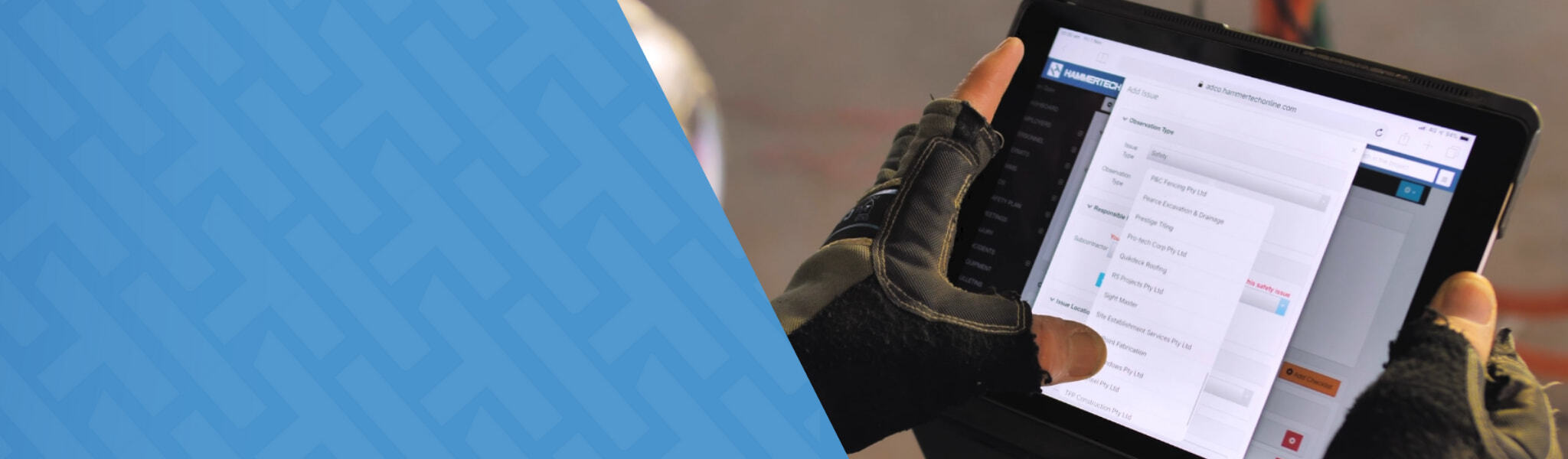
For example, linking HammerTech with Procore ensures safety workflows are tied directly to project delivery. When a new subcontractor is added in Procore, their data syncs automatically into HammerTech, triggering induction invites, RAMS approvals, and permit tracking without a single extra email.
This kind of open API integration bridges two critical worlds: project delivery and safety performance. It keeps superintendents, safety managers, and project executives working from the same playbook.
READ MORE: HammerTech + Procore at London-based BW: Workplace Experts
It’s not about adding another app. It’s about creating a platform that fits inside your ecosystem.
Why “Connected” Outperforms “Digital” Every Time
Digitisation made safety faster. Integration makes it smarter.
The difference shows up in five key outcomes that define high-performing contractors:
|
Outcome |
What “Digital” Delivers |
What Integration Delivers |
|
Visibility |
Individual task-level insights |
Enterprise-wide visibility, live dashboards |
|
Engagement |
Workers fill out digital forms |
Workers see how safety data drives decisions |
|
Consistency |
Site-specific compliance |
Standardised safety workflows across all sites |
|
Speed |
Faster data entry |
Automated workflows, no rework |
|
Results |
Reports after the fact |
Predictive insights and proactive action |
Integration isn’t about replacing humans with software. It’s about connecting people to the information they need, before an incident happens.
From Data to Insight: Building Safety Intelligence
Once safety workflows are integrated, structured data can be leveraged for deeper intelligence.
Platforms like HammerTech automatically capture safety data across RAMS, inspections, incidents, and inductions, transforming it into visual dashboards and performance reports.
Safety Directors can now:
-
Compare leading indicators (like observations) against lagging ones (like LTIs)
-
Identify training gaps before they result in incidents
-
Benchmark subcontractor performance across multiple projects
-
Export safety data directly into BI tools for executive reporting
This isn’t future state, it’s already happening across major contractors in the UK and Ireland who are integrating their systems today.
Integration in the UK & Ireland Context
The UK and Ireland construction markets are highly regulated but also fragmented. Projects often involve dozens of subcontractors and shifting crews. Each has their own processes and systems.
Integration closes that gap by:
-
Unifying safety documentation under CDM requirements.
-
Automating RAMS approvals across multi-trade projects.
-
Supporting mobile access and offline capability for remote sites.
-
Aligning safety data with ESG and client reporting standards.
Contractors like Elliot Group are already proving that enterprise-scale safety integration leads to measurable improvements in compliance, engagement, and productivity.
Summary - Real Safety, Real Results, Actionable Takeaways
When safety, quality, and operations share the same data, contractors move faster, and safer.
Integrated platforms don’t just digitise safety forms; they connect the people, processes, and insights that build safer, better outcomes on every job.
That’s the power of integration.
So, what tips help build a truly integrated construction safety platform?
1. Audit your current safety tech stack: Identify disconnected apps or processes that cause duplication.
2. Prioritise integrations with your project management system: This delivers immediate visibility and time savings.
3. Standardise your safety workflows: RAMS, inductions, and inspections should use the same data model.
4. Turn your data into dashboards: Track leading indicators like observations and toolbox talks alongside lagging indicators.
5. Choose a platform with open APIs and proven scalability: Integration only works when your system can evolve with your business.
Frequently Asked Questions (FAQs)
1. What is an integrated construction safety platform?
It’s a system that connects all safety workflows, inductions, RAMS, permits, inspections, and incidents, into one platform where data flows automatically between modules.
2. How is integration different from digitisation?
Digitisation replaces paper with digital forms. Integration links all safety processes, eliminating rework and enabling real-time visibility across projects.
3. Why is integration important for general contractors?
It provides a single source of truth, reduces administrative time, and allows teams to act on live safety data, boosting both compliance and productivity.
4. Can integrated safety systems connect with project management tools?
Yes. Many leading safety platforms, such as HammerTech, integrate with tools like Procore, Autodesk Construction Cloud, and Power BI for unified workflows.
5. What outcomes can integration deliver?
Reduced incident rates, faster reporting, improved subcontractor compliance, and stronger overall safety culture.