%20GIF.gif?width=200&name=HammerTech%20Intelligence%20(HTI)%20GIF.gif)
Mission-critical sites in the UK and Ireland are achieving incident rates 150% lower than standard commercial builds by treating safety as a performance driver, not a hurdle. Discover how Principal Contractors can scale these "hyperscale" benchmarks - from integrated RAMS to digital permits - to protect project ROI and site teams.
What can commercial contractors learn from mission critical site safety?
The world of construction is constantly evolving, and nowhere is that truer than when it comes to safety on the job site. Innovative processes and technologies are being embraced on mission critical sites and redefining what construction safety success looks like in the modern world.
On these sites, safety is seen not as a hindrance but as an opportunity to achieve the highest safety standards and bring the rate of construction incidents down to almost zero. In turn, commercial contractors can learn from the best practices used in mission critical construction to improve their own safety operations. This allows them to take those best practices and share them with the rest of the company, while also considering how to adapt some of the innovations for jobs that may not have the same resources as mission critical sites.
“It allows us to take best practices and share with the rest of the company but also makes us think about how we can scale some of these innovations to fit the needs of the rest of our jobs which may not have the resources that our mission critical sites have.”
— Clay Nelson, CSP, CHST, Safety Director at Holder Construction
(Note: While these insights come from leading mission-critical safety minds in North America, the challenges of hyperscale construction - complex permitting and aggressive timelines - are identical for Principal Contractors across the UK and Ireland.)
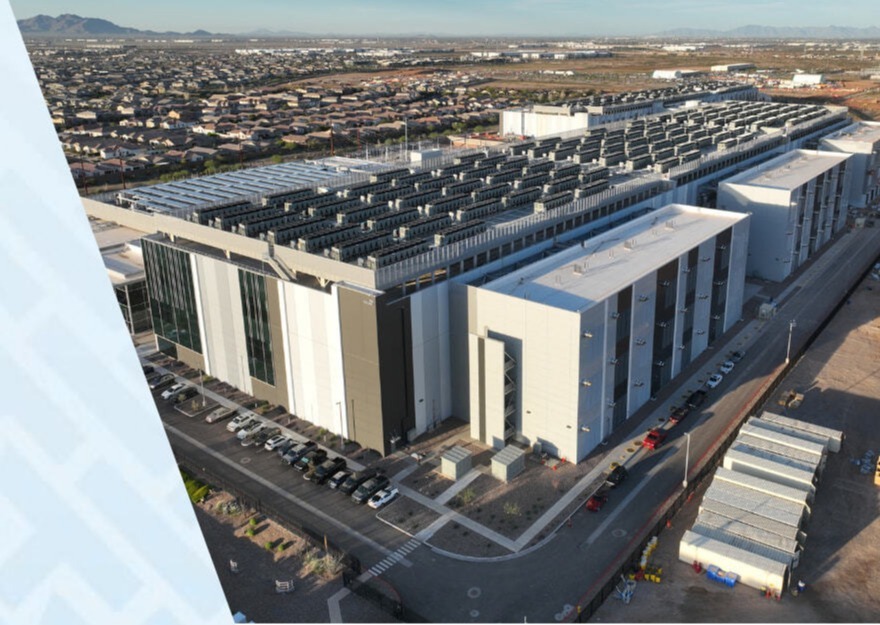
What are ‘mission critical’ sites? And why are they the benchmark?
In hubs like Dublin and London, mission-critical builds are defining the 'Zero-Harm' standard. These sites require a higher level of diligence under CDM 2015 regulations, moving beyond basic compliance to proactive risk management.
They are known as ‘mission critical’ because they need to be functional 100% of the time with minimal outages or issues, even during events that would cause serious disruption for other buildings. The idea is for these buildings to be as close to perfect as possible in all aspects of their operation to give confidence that it is built right.
Features of a mission critical site include:
-
Unique hazards that make the project more complex and present a range of unusual safety risks. For example, the electrical systems in a data centre are generally far more complex than on a normal project, with redundancies, fail safes, multiple power supplies, and other aspects that require bespoke safety considerations.
-
A more significant health and safety burden than most sites due to the extremely high level of diligence required at all stages from the initial incident prevention planning through the installation and testing.
-
Tight schedules and increased complexity necessitate proper planning and adequate coordination between trade partners to avoid delays which can potentially compound.
-
High Profile Owners means that there is also a public relations factor that’s less prevalent on other developments. Owners in this space want to be seen as responsible owners who can deliver on time and to the highest standard.
Project owners are also highly motivated to continuously innovate and pioneer new approaches to enhance site safety practices and protocols during construction, going far beyond basic compliance requirements.
How do mission critical contractors engage with construction safety?
The pursuit of perfection on mission critical projects leads to higher levels of safety investment and technology adoption. The goal is to demonstrate that getting close to zero incidents on site is not just possible, but achievable, through a willingness to adopt and innovate safety processes and on-site culture that everyone from workers to trade partners contributes to.
-
Managing complex systems with layers of redundancies, fail safes, and multiple supplies in the same building can be simplified. Management approvals, system monitoring, multi-level robust controls, permitting, signoffs and more can all be tracked and logged with software, allowing teams to focus on the work in the field and support the workforce instead of spending hours on paperwork and ensuring our documentation is in line.
-
Introduce high levels of accountability into every process and ensure that moment-to-moment processes are linked directly to overarching safety goals.
-
Create safety plans far in advance of tasks beginning to provide plenty of opportunity to offer coaching and training where needed. Improvement to processes can be made weeks or months before people start a job rather than hours or days.
-
Encourage a better understanding of safety and foster a proactive approach that also engages workers in the process. Empowering people by involving them in the implementation and improvement of safety procedures shows them that the company takes their health and safety seriously. In turn, they will take that trust and be active participants in the search for perfection on-site.
How technology empowers safety on complex sites
While the stakes appear higher for mission critical projects, with many commercial projects becoming more complex and the demands for efficiency, labour shortages contributing to a difficult work environment, they have more in common with other construction projects than might first be apparent.
The additional layers of safety vigilance bring the need for accountability and contributions from everyone on the job – not just the principal contractor. Historically, many of these processes have been completed in multiple systems or on paper. However, where there is this much is at stake, a re-think and a fresh look at new ways of managing processes is required.
According to Chris Gitch, CSP, Safety Technologist who has worked on global data centre projects for over 5 years with some of the largest technology clients in the world: "Most mission critical contractors leverage technology to enhance safety."
Some have turned to technology to assist and prioritised several factors that are different to solutions already being used or available in the market:
-
Data visibility that can be shared with owners to instil trust and trade partners to increase accountability.
-
One system that covers all processes to reduce complexity on the job site.
-
Configurable digital workflows that can handle complex processes including sign-offs.
For example: RAMS for structural steelwork
For example, structural steelwork offers a perfect use case for digital RAMS. Under standard processes, a trade partner identifies tasks and hazards, but these are often siloed in paper files. In a mission-critical environment, digital RAMS and high-risk permits are interdependent, ensuring no worker starts a weld without a verified, approved method statement in place.
This standard process presents a number of potential process risks:
-
Multiple linear processes that should be interdependent of each other but are siloed if the process is paper based.
-
No visibility into the status of interdependent processes without tracking down the paper or digital file which may not be completed or approved.
-
Lack of real time understanding of who is doing what, whether they have the required licenses or certification to be undertake the tasks.
-
Looking at things after the fact and correcting risks or hazards after they are already present and exposed.
A standard process will often require the contractor to walk around the site physically to independently verify that everything is in order. This is impractical, and it also makes having a comprehensive overview impossible due to an inability to be everywhere at once.
If these gaps can be closed with the help of tech, contractors can enjoy a list of benefits:
-
Allowing interdependent processes to occur efficiently while closing compliance gaps.
-
Increased visibility and accountability through knowing that the people doing tasks are trained, certified and doing the right thing.
-
Proactive safety culture acts as a force multiplier as one person can do and see multiple things, and everyone can see each other’s work.
Having the visibility gives you the confidence that the right people on site are doing the right things, and having that data available in real time, makes everything more efficient and offers major operational advantages.
Technological solutions can provide measurable ways to ensure that:
-
Work is being planned safely with a credible review and approval process in place.
-
Adequate controls are implemented so that the review and approval process is put into action effectively.
-
See current work activities as they are ongoing in real time, letting you see more than just what you can ‘put your eyes on’ while walking around the job site.
-
Visibility of everything that has happened previously on the job site back to the beginning of the work.
-
Identify and plan what you are doing in the future, allowing enough time for proper training and permitting to be carried out.
“HammerTech allows assistance with the planning and coordination of activities, but it also provides support on the administrative side, which indirectly allows more time to be spent on the pre-planning efforts.”
— Clay Nelson, CSP, CHST - Holder Construction
(Note: While these insights come from leading mission-critical safety minds in North America, the challenges of hyperscale construction - complex permitting and aggressive timelines - are identical for Principal Contractors across the UK and Ireland.)
The long-range planning and accountability that software makes easy benefits every area of the job and demonstrates perfectly why and how mission critical contractors invest in safety technology innovations.
How do mission critical sites achieve such low incident rates?
While the HSE reports significant challenges in high-risk construction sectors, mission-critical sites have proven that high-fidelity planning can drop incident rates significantly. By using technology as a 'force multiplier,' teams can verify worker competencies and plant records instantly, ensuring everyone on-site is 'Site-Ready.'
For example, you can create an electrical permit and lockout process to ensure only the right people can access the system, and that quality management is done to the right standard.
Technology can also help to lower incident rates by improved measurement and accountability that identifies risks.
-
Introduce benchmark metrics and KPIs into existing workflows to eliminate carelessness, blind spots and support continuous improvement.
-
Access to site data and seamless communication to improve incident response time and data-driven decision-making, bridging the gap between field and office.
Technology like HammerTech allows for better decisions and a higher overall standard of safety and once teams on site become used to field safety technology, they tend to actively seek it out again in the future as the benefits of innovation are felt at all stages of the construction process.
Data availability and analysis is the biggest future opportunity in construction industry safety. The more reliable and consistent data we have as an industry, the more deliberate we can be to solve specific problems that we are all faced with.
Commercial contractors can use the pioneering software solutions embraced on mission critical sites and use them to improve the safety of their own sites.
Why should commercial contractors follow suit?
The lesson from mission critical projects is that planning is the key. The more you engage with it, the safer your site will be – especially if you embrace workflow driven, user-friendly technological safety tools.
“The resources available and the push to raise the bar allows principal contractors to experiment and beta test certain processes or innovations on the mission critical sites prior to adopting company wide.”
— Clay Nelson, CSP, CHST - Holder Construction
(Note: While these insights come from leading mission-critical safety minds in North America, the challenges of hyperscale construction - complex permitting and aggressive timelines - are identical for Principal Contractors across the UK and Ireland.)
According to Chris, in 75% of cases where an incident occurs on a construction site, it is because hazards weren’t identified sufficiently far in advance to allow for actions that would avoid or mitigate risk.
This is a big opportunity for any commercial contractor to follow the example of mission critical sites and embrace a software-based solution to improve construction safety.
-
The Health & Safety Executive (HSE) incident rate for the construction of buildings is 5 incidents requiring treatment each year per 100 workers.
-
For mission-critical sites, that figure is one per 100 workers each year.
-
Heightened safety standards and the embrace of safety innovations as a matter of course make mission critical sites up to 150% safer than other construction projects.
“Mission critical sites are up to 150% safer than other construction projects”
— Chris Gitch, CSP, Safety Technology Consultant at HammerTech
(Note: While these insights come from leading mission-critical safety minds in North America, the challenges of hyperscale construction - complex permitting and aggressive timelines - are identical for Principal Contractors across the UK and Ireland.)
How can commercial contractors get started?
The first and most important thing a commercial contractor can do is establish a culture of innovation around safety and understand why technology that improves efficiency and safety benefits them.
-
Embed a higher level of professionalism with higher performance expectations.
-
Create a culture of striving for perfection when it comes to safety on site.
-
Embrace software solutions and find ways to apply and use them to your benefit in ways that suit your company and project.
Software solutions like HammerTech offers the biggest opportunity for commercial contractors to put construction safety at the heart of everything they do and pursue the constant improvement and desire for perfection that defines mission critical sites.
FAQs
Mission-critical construction projects are those that involve essential facilities like data centers and power plants, requiring continuous operation. These projects are distinguished by their vast scale, intricate systems (including power, HVAC, and networking), and a high standard of operational reliability and safety.
Safety standards on mission-critical projects are more rigorous, involving advanced risk management, strict protocols, and a proactive approach to preventing accidents. These projects employ innovative safety measures, such as predictive technology and comprehensive training, setting a higher safety benchmark industry-wide.
Yes, many of the safety practices and protocols developed for mission-critical projects are universally applicable and can elevate safety standards across all construction projects. This includes adopting a proactive safety culture, integrating technology for hazard identification, and ensuring a collective approach to safety responsibility.
Advanced safety measures include using technology to predict potential accidents, facial recognition for access control, detailed work permitting, and a robust near-miss identification program. These measures help manage risks more effectively and maintain high safety levels on site.
Focusing on safety leads to reduced incidents and injuries, enhanced worker morale, cost savings, and a reputation boost for companies. By adopting mission-critical safety standards, the construction industry can improve overall safety, productivity, and quality of work.
Building a culture of safety involves creating an environment where every team member takes safety seriously and looks out for each other's well-being. This can be achieved through comprehensive training, active participation in safety protocols, and open communication about safety concerns and improvements.
Technology plays a crucial role in improving safety by enabling predictive safety measures, facilitating real-time communication, and assisting in hazard identification. It allows for more effective risk management and helps prevent accidents before they occur.
Safety measures can be scaled down and adapted for smaller projects through regular risk assessments, employing technology for hazard identification, and fostering a proactive safety culture. Even basic versions of these practices can significantly enhance safety on smaller sites.